THMs Exposure Risk Assessment and Disease Burden of Bladder Cancer in Drinking-Water of Some Cities in China
Xiaoshuang Wang, Yongqing Lin and Shaoxia Dong
Xiaoshuang Wang, Yongqing Lin and Shaoxia Dong*
Department of oncology, National Institute of Environmental Health, Chinese Center for Disease Control and Prevention, Chaoyang, China
- *Corresponding Author:
- Shaoxia Dong Department of oncology, National Institute of Environmental Health, Chinese Center for Disease Control and Prevention, Chaoyang, China E-mail: dongshaoxia@nieh.chinacdc.cn
Received Date: November 19, 2021; Accepted Date: December 03, 2021; Published Date: December 7, 2021
Citation: Wang X, Lin Y, Dong S (2021) THMs Exposure Risk Assessment and Disease Burden of Bladder Cancer in Drinking-Water of Some Cities in China. Health Sys Policy Res Vol.8 No.6: 108.
Abstract
As a result, four types of THMs are all detected in the drinking water of some cities in China, including chloroform (TCM), bromoform (TBM), Di Bromo Chloro Methane (DBCM), and Bromodichloromethane (BDCM). The health risk of TCM, TBM, DCBM, and DBCM is 1.40 × 10⁻⁶, 4.3 × 10⁻⁷, 7.63 × 10⁻⁶, and 7.93 × 10⁻⁶, respectively. And the hazard index (HI) values of TCM, TBM, DCBM and DBCM are 0.023, 0.0027, 0.0061, and 0.0047, respectively. The PAF of bladder cancer exposed to the THMs is 0.017% in all cities referred to in this study. Combining with the PAF, the corresponding disease burden attributed to the exposure of THMs is 1.89/100,000, indicating that it may cause a certain disease burden.
Keywords
Trichloroethane; Disinfection by-products; Risk assessment; Burden of disease; Drinking water
Introduction
Chlorination has become one of the most common disinfection measures in the field of water purification due to its characteristics of excellent germicidal effect, long duration, low processing cost, easy operation and management, and so on. It is very hard to be completely replaced by other disinfectants in a short time [1,2]. Chlorination can control the incidence of waterborne infectious diseases, but it can also react with certain precursors (organic or inorganic) in water to generate Disinfection By-Products (DBPs) that are potentially dangerous to human health Trihalomethanes (THMs) are one type of them, mainly including chloroform (TCM), bromoform (TBM), Dibromochloromethane (DBCM) and Bromodichloromethane (BDCM) [3-7].
Currently, THMs have been given a lot of attention [8-12]. As far as the discussion on the effects of THMs on human health, TCM is mainly involved at present, and the toxic effects of other THMs may be similar to TCM. TCM is an inhibitor of the central nervous system and also affects liver and kidney function [8]. More importantly, animal experiments have shown that it had carcinogenic effects [13]. In an epidemiological study, Cantor, et al. [14] found that mortality induced by bladder cancer in the population is linked to the concentrations of THMs in drinking water, and the degree of correlation is proportional to the percentage of the population covered by drinking water supply.
Bladder cancer is a malignant tumor, the most ordinary one in the urinary system that is present in the bladder mucosa and is one of the top ten cancers in humans [14]. Research indicates that this is 80,500 cases of bladder cancer in China in 2013, and 32,900 cases died because of bladder cancer. The burden of disease due to bladder cancer is heavier [15]. According to the Chinese Cancer Registry Annual Report 2016 [16], the cumulative mortality rate of bladder cancer in the population from death years old is 0.12%, accounting for 1.42% of the deaths of malignant tumors in China. The mortality rate of bladder cancer in males is 2.9 times higher than that in females. And the mortality rate of bladder cancer in the urban population is 1.6 times higher than in the rural population. Bladder cancer is the 9th most common malignancy and gets a high prevalence in developed countries. Although compared to other developed countries, China has a relatively low mortality rate of bladder cancer, it gets higher year by year which may owe in part to the aging population.
Health risk assessment is an approach using risk as an evaluation index, linking environmental pollution level with human health, quantitatively describing the health hazard of pollutants to the human body, mainly for the evaluation of genotoxic substances and physical toxic substances in the environment [17,18]. In this article, the exposure levels and characteristics of THMs in drinking water in some cities are discussed and summarized. The health risk assessment is conducted on 4 THMs. We also referred to the dose-response relationship of the study published by Costet, et al. in 2011 [19] and combined with the data from the literature retrieval to calculate the PAF, quantitatively estimated the bladder cancer disease burden exposed to THMs in drinking water from some cities in China.
Materials and Methods
Literature searches and data extraction
We searched the English-language database PubMed (National Library of Medicine,Bethesda,MD,USA), Web of Science (Thompson Scientific,Philadephia,PA,USA), Embase (Elsevier, Amsterdam, Dutch), and Chinese-language database including China National Knowledge Infrastructure (CNKI), SinoMed and Wanfang Database on the level of THMs in waters from the water treatment plant, distribution system and taps in China, which are publicly published between 1997 and 2017. The following keywords are utilized: Trichloroethanes, disinfection by-products, and drinking water. The corresponding English retrieval type is (Trihalomethanes) OR (THM) OR (Chloroform) OR (TCM)OR (Bromoform) OR (TBM) OR (Dibromochloromethane) OR (DBCM) OR (Bromodichloromethane) OR (BDCM)] AND [(Disinfection by-products) OR (DBPs)] AND (Drinking-Water) AND (China OR Chinese) to conduct a fuzzy matching search. Through computer search then combined with reference retrospective methods, the literature about the exposure of THMs in drinking water of China is determined.
Inclusion criteria:
• The research subjects are the THMs in drinking water from different water sources like the water treatment plant, distribution system, taps, and secondary water supply, and so on in China.
• The test substance is one or more of 4 kinds of THMs.
• Clearly described the water treatment process and disinfection methods.
• Site and time of water sampling are clearly stated.
• Detection method of water samples is stated or approved by the national or international standards.
• Another source of drinking water detection such as the bottled water supplied at the supermarket.
• Reported the type of THMs, sample size, and concentration.
Exclusion criteria:
• Over 20 years’ Publication.
• Special areas such as the chemical industry contaminated by THMs.
• Study on the THMs level detected in source water such as a river or wastewater treatment plants.
• Repeated articles will be used to include the latest one.
• Reviews will be excluding and only the original article can be selected for the analysis.
• The design has obvious flaws, the detection methods don’t meet the criteria, the information is incomplete, or verify statistical calculations have errors.
• Study on THMs detection methods and without specific data on THMs level.
• Meeting abstract [20].
Quality controls
Literature search, literature screening, information excerpt, and literature quality assessment are all performed by trained personnel. When there is uncertainty or disagreement in the process of literature arrangement, it is resolved through group discussion or consultation with a third party.
Statistical analysis
For the selected studies, the Excel database (Version 2007 Microsoft, Redmond, WA, USA) is used to extract the information including the title, first author, sampling time, sampling site, several samples, disinfection method, and type of disinfectant, test substance, population coverage, the type and concentration of detected THMs in drinking water to establish a database. The SPSS 17.0 is used to statistically analyze the average concentration of various THMs (TCM, TBM, DCBM and DBCM) in different water sources (distribution systems, taps and secondary water supply). According to the Kolmogorov-Smirnow normality test, the data of this group belonged to the non-normal distribution (P<0.01), so it is reflected in the Median (M) and interrogated range. The Kruskal-Wallis method rank-sum test is utilized to compare the water sources of multiple groups, and the exact probability is calculated, α=0.05.
Health risk assessment models
Cancer risk: Cancer risk indicates the incidence of cancer that exceeds normal levels in a lifetime caused by exposure to carcinogens. It is widely accepted that there is a linear relationship between the carcinogenic risk and the concentration of carcinogenic compounds in water at low concentrations in a long time, for example, a total lifetime. For exposure to drinking water, the evaluation formula is usually [21].
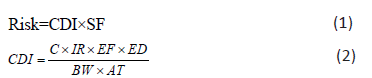
Where:
Risk: total lifetime cancer risk (unitless); CDI: The long-term daily intake dose, mg/(kg.d); SF: The carcinogenic slope factor of the pollutants, indicating that the human body is exposed to a chemical carcinogen at a dose of 1 mg/(kg.d) for life. SF values of TCM, TBM, DCBM, and DBCM are 0.0061, 0.0079, 0.0620 and 0.0840 kg.d/mg, respectively (EPA 1989); C: The concentration of THMs in drinking water (mg/L); IR: The daily drinking water (L/d) of adults is taken 2 L/d; EF: The exposure frequency (d/a) is taken 365 d/a; ED: The duration of exposure (a) is taken 70a for carcinogens; BW: Per capita body weight (kg) is taken 70 kg; AT: Average exposure time (d) is taken 70a (25500d).
Non-carcinogenic risk: The non-carcinogenic chronic toxicity of chemical pollutants in the human body is usually measured by the Reference Dose (RFD). Exposure levels above the reference dose may be detrimental. Exposure levels are equal to or lower than the reference dose are probably not dangerous. For the THMs risk index HI for oral exposure non-carcinogenic risk assessment,the following formula is used (EPA 1989).
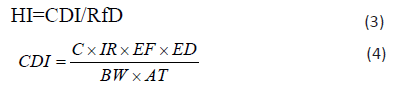
Where:
CDI: the long-term daily intake dose, mg/(kg.d); RfD: Non- carcinogenic reference dose of pollutants, mg / (kg.d), TCM, TBM, DCBM, DBCM values are 0.01, 0.02, 0.02, 0.02mg / (kg.d), respectively; C: The concentration of THMs in drinking water (mg/L); IR: The daily drinking water (L/d) of adults is taken 2 L/d;EF: The exposure frequency (d/a) is taken 365 d/a; ED: The duration of exposure (a) is taken 30a for non-carcinogens; BW: Per capita body weight (kg) is taken 70 kg; AT: Average exposure time (d) is taken 30a (10950d).
Health risk assessment criteria: At present, health risk assessment is still in its infancy in China, and there is no uniform standard for risk assessment. According to the standards of the US EPA (EPA 1989), for the cancer risk, the acceptable risk level is set to 1.0 × 10⁻⁶-1.0 × 10⁻⁴, that is, when the cancer risk is lower than 1.0 × 10⁻⁶, the risk is not obvious, risks are considered acceptable within the scope. Higher than 1.0 × 10⁻⁴ are considered to have significant risks. For non-carcinogenic risks, calculate the health hazard for each substance (HI), HI<1, and con
Disease burdens
Because there is currently a lack of studies on the association between THMs exposure and the risk of bladder cancer, we used the dose-response relationship of the literature on the incidence of THMs exposure and bladder cancer according to a study published by [19]. Then calculating the PAF to quantitatively evaluate the disease burden of bladder cancer attributed to the THMs exposure. The definite methods are as follows.
We took the burden of disease approach (WHO and UNEP 2015) (International Programme on Chemical Safety [22] to calculate the number of annual cases of bladder cancer attributable to THMs exposure. The annual attributable bladder cancer cases are calculated for our country is
Attributable cases = Annual cases in 2013 × PAF (5)
Annual cases in 2013 are provided by the study of Fitzmaurice et al. [15].We estimated the PAF as (WHO 2016), the definition of PAF refers to among the population, the incidence of a disease caused by a certain percentage of the total incidence of the disease.
PAF= (OR-1)/OR × 100% (6)
OR is for the exposure difference between the exposure level in China and the minimum exposure that is set at 0 μg/L. To calculate the exposure difference. We used the formula by Mueller et al. (Muller J 2016) [23]
OR exposure difference=Exp (((ln (OR))/exposure unit) × (exposure difference)) (7)
In our data it is:
OR exposure difference=Exp (((ln (1.004))/1) ×current THMs level) (8)
Results
Description of studies
The database systematically retrieved 551 articles in English respectively. Being dependent on the literature screening process (Figure 1), the articles are gradually screened. Duplicate literature is free of the article titles. Reading abstracts exclude reports on the detection methods and formation mechanisms of THMs. Through looking at the full text, unqualified documents are excluded according to the eligibility criteria and exclusion criteria. Finally, the original data is thoroughly checked, 53 qualified [24-26] is obtained through multiple rounds of screening. The literature reported one or more THMs levels in one or more drinking water plants in some cities. All the cities covered in this study are shown on the map below (Figure 2).
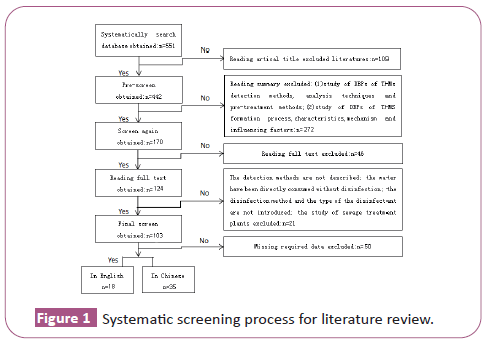
Figure 1: Systematic screening process for literature review.
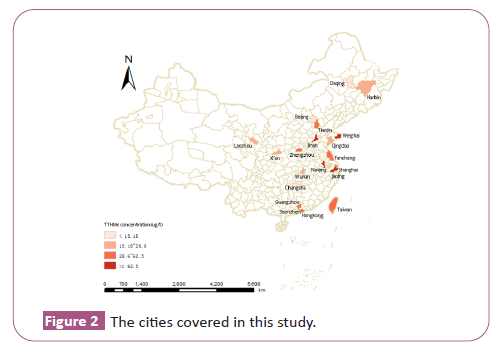
Figure 2: The cities covered in this study.
THMs concentration in different water sources: To study whether the concentrations of various trichloroethanes (TCM, TBM, DCBM and DBCM) in drinking water of different water sources are statistically different, they are classified into three categories according to the type of water source: Distribution system, taps, and secondary water supply (Table 1). The concentration (median) of TCM in the distribution system, taps, and secondary water supply is 8.57,8.34,3.65 μg/L, respectively. The Kruskal- Wallis method rank-sum test showed that there is no significant difference in TCM contents among the three water sources (c2=4.51, P>0.05). The concentration of TBM in the distribution system, taps, and secondary water supply is 1.90, 2.32, 2.35 μg/L, the results showed that there is no significant difference in TBM (c2=2.24, P>0.05). The concentration of DCBM in the distribution system, taps, and secondary water supply is 4.01, 5.17, 2.74 μg/L, the results showed that there is no significant difference in DCBM (c2=2.63, P>0.05). The concentration of DBCM in the distribution system, taps, and secondary water supply is 2.80, 4.09, 3.00 μg/L, the results showed that there is no significant difference in DBCM (c2=1.21, P>0.05).
| Water source | TCM | TBM | DCBM | DBCM | ||||
|---|---|---|---|---|---|---|---|---|
| M | Q | M | Q | M | Q | M | Q | |
| Distribution system | 8.57 | 7.91 | 1.9 | 4.54 | 4.01 | 3.86 | 2.8 | 5.91 |
| Taps | 8.34 | 8.23 | 2.32 | 7.51 | 5.17 | 7.62 | 4.09 | 8.64 |
| Secondary water supply | 3.65 | 2.32 | 2.35 | 4.09 | 2.74 | 3.28 | 3 | 5 |
| Total | 7.98 | 7.13 | 1.9 | 4.7 | 4.31 | 5.87 | 3.33 | 5.96 |
Table 1: THMs concentration in different water sources (μg/L).
Health risk assessments of THMs
Cancer risk assessment: Depending on the above cancer risk assessment model, the lifetime carcinogenic risk value of THMs in separate water supply types in some cities of China is calculated (Table 2).
| Water source | TCM | TBM | DCBM | DBCM | THMs |
|---|---|---|---|---|---|
| Distribution system | 1.5 | 0.43 | 7.1 | 6.73 | 15.76 |
| Taps | 1.45 | 0.52 | 9.23 | 9.86 | 21.06 |
| Secondary water supply | 0.65 | 0.54 | 4.79 | 7.21 | 13.19 |
| Total | 1.4 | 0.43 | 7.63 | 7.93 | 17.39 |
Table 2: Cancer risk assessment value of THMs in different water sources (×10-6).
It can be seen from the above table that the carcinogenic risk value of each THMs is lower than 1.0 × 10⁻⁴, which is in line with the acceptable level of US EPA (1.0 × 10⁻⁶-1.0 × 10⁻⁴). Except for the carcinogenic risk value of TBM in 3 types of water sources and TCM in the secondary water supply are lower than 1.0 × 10⁻⁶, the risk is not obvious, and the other values are all higher than 1.0 × 10⁻⁶. It considers that there is a definite risk but within the acceptable level. Among them, TCM holds the highest risk of carcinogenesis in the distribution system, and TBM has the highest carcinogenic risk in the secondary water supply. Both DCBM and DBCM have the highest risk of cancer in taps. The risk of cancer in DBCM and DCBM is much higher than that of TCM and TBM, and the highest is even more than 10 times. DBCM contributed the most to cancer risk in taps and secondary water supply, which are 46.8% and 54.7%, respectively. DCBM contributed the most to the risk of carcinogenicity in the distribution system, which is 45.1%. From the overall level of carcinogenic risk for THMs, the carcinogenic risk value in different water sources: Taps>distribution system>secondary water supply, and four types of THMs: DBCM>DCBM>TCM>TBM.
Non-carcinogenic risk assessment: Given the toxicological properties of THMs, which may be human carcinogens and suspected human carcinogens, the (incremental) cancer risk assessment of THMs in drinking water should also take into account the calculation of the risk index. According to the above model, the lifetime non-carcinogenic risk value of THMs in different water sources in some cities of China is calculated, as shown in Table 3.
| Water source | TCM | TBM | DCBM | DBCM | THMs |
|---|---|---|---|---|---|
| Distribution system | 0.025 | 0.0027 | 0.0057 | 0.004 | 0.037 |
| Taps | 0.024 | 0.0033 | 0.0074 | 0.0059 | 0.041 |
| Secondary water supply | 0.011 | 0.0034 | 0.0039 | 0.0043 | 0.023 |
| Total | 0.023 | 0.0027 | 0.0061 | 0.0047 | 0.037 |
Table 3: HI of THMs in different water sources.
As can be seen from the above table, the HI of all THMs is much less than 1, and the risk is within an acceptable range, similar to the carcinogenic risk result. Among them, TCM holds the highest HI in the distribution system, TBM has the highest HI in secondary water supply, and DCBM and DBCM have the highest HI in taps. TCM contributed the most to non-carcinogenic risks in each type of water supply, which is 67.6%, 58.5%, and 47.8% in the distribution system, taps, and secondary water supply, respectively, which is diverse from carcinogenic risk consequences. From the overall level of non-carcinogenic risk assessment of THMs, the HI value in different water sources: Taps>distribution system>secondary water supply, and four types of THMs: TCM>DCBM>DBCM>TBM.
Quantitative assessments of disease burden
Based on the literature search results and we combined the statistical methods to calculate the PAF. Firstly, the PAF of every city is calculated respectively (Table 4). Then the average of those cities’ THMs concentrations is utilized to calculate the total PAF, which is 0.017%, indicating that 0.017% of the total population incidence rate (or mortality rate) is ascribed to exposure to THMs in drinking water.
| City | Reported year(s) | THMs (mg/L) | Population size | PAF (%) | Disease burden (/100,000) |
|---|---|---|---|---|---|
| Nanjing | 2009-2013 | 0.25 | 81,87,800 | 0.099 | 0.65 |
| Daqing | 2008-2009 | 0.013 | 27,34,000 | 0.0053 | 0.012 |
| Beijing | 2008-2009 | 0.014 | 1,96,12,400 | 0.0058 | 0.091 |
| Lanzhou | 1997 | 0.015 | 11,93,340 | 0.0061 | 0.0058 |
| Tianjin | 2008-2009 | 0.042 | 1,04,30,000 | 0.017 | 0.14 |
| Zhengzhou | 2008-2009 | 0.046 | 86,26,505 | 0.018 | 0.13 |
| Changsha | 2008-2009 | 0.0093 | 64,65,000 | 0.0037 | 0.019 |
| Shenzhen | 2015 | 0.26 | 1,07,78,900 | 0.1 | 0.88 |
| Taiwan | 2002-2003 | 0.034 | 83,21,707 | 0.014 | 0.09 |
| Yancheng | 2014-2017 | 0.054 | 24,00,000 | 0.021 | 0.041 |
| Wuhan | 2008-2009 | 0.026 | 89,70,000 | 0.01 | 0.074 |
| Shanghai | 2010-2011 | 0.068 | 20,00,000 | 0.027 | 0.043 |
| Xi'an | 2006 | 0.017 | 66,70,300 | 0.0067 | 0.036 |
| Wuxi | 2007-2010 | 0.014 | 12,07,100 | 0.0057 | 0.0055 |
| Weihai | 2012-2013 | 0.43 | 28,04,800 | 0.17 | 0.39 |
| Hongkong | 2003 | 0.056 | 68,03,100 | 0.022 | 0.12 |
| Qingdao | 2013-2014 | 0.029 | 87,51,500 | 0.011 | 0.08 |
| Jinan | 2008--2009 | 0.65 | 44,88,400 | 0.26 | 0.93 |
| Guangzhou | 2012 | 0.046 | 89,87,200 | 0.019 | 0.13 |
| Jiaxing | 2007-2009 | 0.13 | 6,71,800 | 0.05 | 0.027 |
| Harbin | 2009 | 0.042 | 99,16,000 | 0.0072 | 0.054 |
| Total | 0.042 | 140019852 | 0.017 | 1.89 | |
Table 4: Detailed information for each study.
To ensure that everyone can obtain safe drinking water. China has vigorously promoted the construction of water supply facilities. This measure has greatly improved the quality of drinking water. However, the disinfection of the water supply may expand the exposure risk of THMs. According to the 2016 Urban and Rural Construction Statistics Bulletin [16], the urban population of water utilization is 470 million people, the coverage rate of tap water supply is 98.42%; The county population of water utilization is 140 million, the coverage rate of tap water supply is 90.5%, and the total population of rural households is 958 million, the coverage rate of tap water supply is 68.7%, which means that there are approximately 1.247 billion people exposed to the risk of THMs. Research shows that in 2013 there are 80,500 cases of bladder cancer in China, with 32,900 cases of bladder cancer deaths, the proportion of the incidence to the exposed population is 6.46/100,000. Combining with the PAF achieved in this study, attributable cases are calculated. Then the disease burden of bladder cancer that attributes to the exposure of THMs is derived. The total disease burden is 1.89/100,000, representing 1.89 out of every 100,000 exposed populations suffering from bladder cancer due to exposure to THMs in drinking water. And every city’s disease burden is as being followed in Table 4.
Discussion
THMs in drinking water can be obtained by chlorination, including liquid chlorine disinfection, chloramine disinfection, chlorine dioxide disinfection, and so on. Through chemical reactions with chlorine, these precursors could generate THMs mainly including TCM, TBM, DCBM, and DBCM. The concentrations are generally at the level of μg/L and are often detected together with other types. Altered water sources and disinfectants will produce different DBPs by chemical reactions. And even if the same source of water, the DBPs also can be changed when different selected disinfectants are accustomed. DBPs have raised a grave threat to human health [27]. Among them, TCM has long been upheld to result in tumors in animals. Therefore, conducting a study about genetic toxicity, potential carcinogenicity, and possible toxic effects of THMs in drinking water based on exposure characteristics is very important for accurately understanding and evaluating the health risks. The results are compared with the data of other countries, comparable to other countries’ findings reported [28-31]. Some individual indicators can’t be compared scientifically owing to the lack of data from relevant literature, but the overall level can still be compared. In this study, the average concentration of each THMs is transmitted to Canada Irish, Nigeria, and Qatar. The concentration of most indicators is the average level, but some indicators' concentration is so high that should be paid attention to. Especially the TCM, except that the average TCM concentration of Nigeria is 496.92μg/L that higher than this study’s 42.15μg/L, the concentration of TCM in China is all higher than other countries [30].
Analysis from 4 types of THMs, the health risk of TCM, TBM, DCBM and DBCM is 1.40 × 10⁻⁶, 4.3 × 10⁻⁷, 7.63 × 10⁻⁶, and 7.93 × 10⁻⁶. Among them, the cancer risk of TBM is less than the US EPA recommendation (1 × 10⁻⁶), and it is considered that there is no discernible risk to human health. The carcinogenic risk of TCM, DCBM, and DBCM is higher than 1 × 10⁻⁶, which is thought to be risky, but less than 1 × 10⁻⁴, which is thought to be within the acceptable range. And the Hazard Index (HI) values of TCM, TBM, DCBM and DBCM are 0.023, 0.0027, 0.0061 and 0.0047, respectively. The HI of all types of THMs is far less than 1, and it is expected that it will not cause health damage and meet safety requirements. From the analysis of water supply type, the cancer risk of THMs in taps, distribution systems, and secondary water supply is 1.58 × 10⁻⁵, 2.11 × 10⁻⁵ and 1.32 × 10⁻⁵. HI is 0.037,0.041, 0.023, respectively; the carcinogenic risk in different water sources is between 1 × 10⁻⁶-1 × 10⁻⁴, with a slight risk but within an acceptable range. The risk index is far less than 1, and it is considered that it will not affect human health.
Bladder cancer is a malignant tumor and one of the ten most common cancers in humans[8]. Numerous epidemiological studies show that there is a relationship between the exposure of THMs and the risk of bladder cancer. So built on the above data through literature search results and the PAF calculation methods, the PAF of THMs is 0.017% in all cities that this study covered. Combining with the PAF, the corresponding disease burden attributed to the exposure of THMs is 1.89/100,000. This result indicates that about 1.89 people per 100,000 bladder cancer patients in China are just sick of exposure to THMs in daily drinking water, which brings a certified disease burden to society as a whole and the country.
This study also estimated the disease burden of bladder cancer of THMs exposure in drinking water of some Chinese cities, provides clues for further exploration of THMs exposure in drinking water and health effects, but most of this research has some deficiencies and flaws in the assessment methods. First of all, at present, because of the lack of research on the relationship between THMs exposure and the risk of bladder cancer in China, we use the dose-response relationship in the study published in 2011 to calculate the PAF [19]. This dose-response relationship is more applicable to calculations in some parts of other countries. Therefore, there still are some doubts about the accuracy of the calculated PAF in China. So, it may cause some bias due to the difference in regions, water utilization, and other factors. Secondly, the parameters of this health risk assessment model are mostly referenced to the US EPA reference value. Due to differences in living habits and standards. The parameters are not entirely suitable for Chinese residents [32,33] Domestic development and improvement of health risk-related content is also a need through extensive research. Also, there are numerous indicators for assessing the burden of disease.
Traditional indicators include morbidity, incidence, prevalence, and population attribution fractions that are used in this study. However, the World Health Organization (WHO) indicates that to comprehensively reflect the burden of the disease DALY (Disability Adjusted Life Year) is the recommended evaluation indicator. In this study, only the traditional PAF index is utilized only for the quantitative assessment of disease burden, so it still lacks a comprehensive evaluation compared to DALY. And in the quantitative assessment of the disease burden of bladder cancer, bladder cancer is caused by long-term exposure to THMs, but there is no definite information to show the incidence cycle of this disease. The data of the incidence of bladder cancer and the population of centralized water supply are from 2015 and 2016, respectively. However, these data are constantly changing with time. The data of a certain year cannot accurately represent data of the incidence period of bladder cancer. This, to a certain extent, also imposes some limitations on this study.
Conclusion
In this article, this study analyzed the exposure level of THMs in drinking water of China, applied the risk assessment model recommended by the US EPA to quantitatively describe the risks to human health through drinking water routes, determine the primary and secondary order of drinking water pollutants, prioritize the control of pollutants, and provide evidence for the administrative department to conduct risk management. Meanwhile, we referred to the dose-response relationship of the study published in 2011 and combined it with the data from the literature search to calculate the PAF of bladder cancer, then quantitatively estimated the disease burden of bladder cancer of THMs exposure in drinking water in some Chinese cities. It provides clues for further exploration of THMs exposure in drinking water and provides a dose reference for subsequent studies on the toxicity of low-dose mixed exposure of THMs in drinking water.
This evidence reviewed here suggests that in the past 20 years, DBPs mainly including 4 types of THMs have been commonly detected in some water treatment plants in Chinese cities. The concentration is usually at the microgram level. And the results are compared with the other countries’ findings reported. Although the concentrations of the 4 types of THMs in the water samples tested in this study did not exceed the limits of GB5749- 2006 Sanitary Standard for Drinking Water, according to the low- dose cancer risk assessment method recommended by US EPA, the carcinogenic risk of the 4 types of THMs exceeds the level that the US EPA considers negligible level (<1 × 10⁻⁶), between 1 × 10⁻⁶- 1 × 10⁻⁴. It accepts but there is already a health risk. Among them, DCBM and DBCM have higher cancer risks. Meanwhile, taps and distribution systems are closely related to human health, which is also had a higher cancer risk that should be given attention to. It is necessary to continuously strengthen the monitoring and control of water sources at a health risk higher than 1 × 10⁻⁶ and take various measures to reduce the content of chemical pollutants in the factory water.
The exposure level of THMs in drinking water is inseparable from the incidence of bladder cancer. It can be observed that the exposure of THMs can cause a definite disease burden in some cities of China. In particular, the contents of THMs in Jinan, Weihai, Shenzhen, and other cities are quite prominent, and the PAF value far exceeds the average PAF of all cities. Even though China is a country with a low level of bladder cancer death, mortality of bladder cancer has shown an increasing trend in recent years, which may partly be owing to the increasing life expectancy. Due to the national policy to improve safe water coverage and enlarge the vital water supply area, chlorinated DBPs occur from the disinfection process should be strictly controlled to reduce health risks and disease burden of bladder cancer.
As the most conspicuous type of chlorinated DBPs, THMs can be generated from raw water or the chlorination process. To reduce cancer risk and hazard index values of THMs, some methods could be used and more attention should be concentrated on the routine monitoring and treatment technique to reduce both DBPs precursors and microbial contaminants in drinking water. Even though some information is obtained from toxicological and epidemiological studies, the potential human risks associated with drinking water disinfection are largely unknown. More research is required to determine the risks and disease burden associated with THMs. The subsequent progress will facilitate a realistic assessment of risk due to drinking water contaminants without increasing the levels of uncertainty in risk estimates.
Data Availability Statement
Some or all data, models, or codes that support the findings of this study are obtained from the corresponding author upon reasonable request.
Declaration of Interests
The authors declare that they have no known competing financial interests or personal relationships that could have influenced the work reported in this paper.
Funding Information
None
Animal Research
None
Consent to Participate and Publish
We agree to the compilation rights, distribution rights, copyrights, and translation rights of the copyright of the article ‘THMs Exposure Risk Assessment and Disease Burden of Bladder Cancer in Drinking-Water of Some Cities in China’ in the journal of public health management and practice. We guarantee that this article is original and the experimental materials, methods, and data are accurate and reliable. There is no one manuscript and two submissions. The author's signature is not disputed and does not involve confidentiality and other copyright-related infringement issues. If the problems mentioned above occurring, we shall bear all responsibilities. We will be responsible for proofreading and verifying the revisions, including the ranking of co-authors and any corrections. If we do not notify the editorial department, we agree that the editorial department will publish the revised version.
Human Participant Compliance Statement
None
Implications for Policy and Practice
Chlorination has been extensively used for drinking water disinfection with high efficiency for many years in China. To gain a better understanding of the levels and characteristics of THMs and quantitatively evaluate the bladder cancer disease burden exposed to THMs, a study premised on risk assessment and disease burden evaluation is conducted.
In this study, results showed that in the past 20 years, 4 types of THMs in drinking water have been discovered and the concentrations are at microgram level in some cities of China. Among them, chloroform (TCM) has the highest detection rate with the highest concentration of 33.66μg/L. The average concentrations of TCM, TBM, DCBM and DBCM are the following: 7.98, 1.90, 5.87, 3.33μg/L, respectively, all are lower than the limit of GB5749-2006 Sanitary Standard for Drinking Water.
The PAF of bladder cancer exposed to the THMs is 0.017% in all cities referred to in this study. Combining with the PAF, the corresponding disease burden attributed to the exposure of THMs is 1.89/100,000, indicating that it may cause a certain disease burden.
It can display in Table 4 that the concentration of THMs in each city is in line with the GB5749-2006 Sanitary Standard for Drinking-Water, but some cities have higher concentrations of THMs than other cities, which are close to the national standard limit. For instance, in Jinan, Weihai, and Shenzhen, PAF values are 0.26%, 0.17%, 0.10%, respectively, which is much higher than the average of 0.017% in each city.
References
- Lipeng H, Qiao S, Xiaolin L (2014) Contents of trichloromethanes and haloacetic acid in drinking water and its health risk assessment in Pudong new area of Shanghai. JOEM 31: 442-447.
- Daizhi A, Yun S, Lili W (2016) Study on quadratic curve regression of chloroform and carbon tetrachloride detection in water. PTCA 52: 77-79.
- Jiang J, Han J, Zhang X (2020) Nonhalogenated Aromatic DBPs in Drinking Water Chlorination: A Gap between NOM and Halogenated Aromatic DBPs. Environ Sci Tech 54: 16-20.
- Ding S, Chu W, Bond T, Wang Q, Gao N (2017) Formation and estimated toxicity of trichloromethanes, haloacetonitriles, and halo acetamides from the chlorination of acetaminophen. J Hazard Mater 341: 112-119.
- Li X F, Mitch W A (2018) Drinking-Water Disinfection Byproducts (DBPs) and Human Health Effects: Multidisciplinary Challenges and Opportunities. Environ Sci Technol 52: 1681-1689.
- Mishra B K, Gupta S K, Sinha A (2014) Human health risk analysis from disinfection by-products (DBPs) in drinking and bathing water in some Indian cities. J Environ Health Sci Eng 4: 12-73.
- Shaobo Y, Jian X, Yin Y (2017) Study on the formation characteristics and control technology of trichloroethanes in drinking water. Environ Sci Manag 42: 91-97.
- Yuanxin G, Zhiliang Z, Yusen Lu (2006) Health risk analysis and evaluation of drinking water disinfection. Water Purification Techn 25: 1-5.
- Weiwei L, Ke X, Huiyu D (2016) UV/H2O2 technology to control the formation of bromate and trihalomethanes after water filtration in Qingcaosha water source in Shanghai. Environ Chem 35: 615-622.
- Qiaoling W, Liangchao W, Weiwei Y (2016) A study on the changing regularity of DBPs in tapping water. Environ Sci Technol 2: 110-114.
- Jiayu L, Qiong W, Xiaodi D (2016) Determination of trichloroethanes and carbon-chloromethane in drinking water by direct injection-gas chromatography. Physical Testing and Chemical Analysis Part 52: 255-258.
- Chongchen T, Jian Y, Hongying Y (2012) Research progresses on disinfection by-products in trichloromethanes and haloacetic acid in drinking water treatment. Water Purification Technology 31: 6-11.
- Lin Z (1999) Chlorination and trichloroethanes in drinking water. Chinese Urban and Rural Business Health 3: 22-23.
- Yuanyuan L, Beane Freeman L E, Cantor K P, Baris D (2017) Disinfection by-products trichloromethane and bladder cancer. J Environ Hygiene 7: 416.
- Fitzmaurice C, Dicker D. Pain A (2015) The Global burden of disease cancer 2013. Global burden of disease cancer collaboration. JAMA Oncology 1: 505-527.
- Jie H, Wanqing C (2016) China Cancer Registry Annual Report 2016[G]. Beijing: Tsinghua University Press 179-183.
- Yang Y, Lu X, Li D (2014) Research development on environmental health risks assessment in China. J Environ Health 31: 357-363.
- Tan M, Xiong W, Rang W (2014) Application of Monte Carlo method in health risk assessment. Chinese Journal of Disease Control 18: 343-345.
- N Costet, C M Villanueva, Jaakkola J J (2011) Water disinfection by-products and bladder cancer: Is the matter a European specificity? A pooled and meta-analysis of European case-control studies. Occupy Environ Med 68: 379-85.
- Haiyan W, Xiuquan S, Ming G (2017) Meta-analysis of exposure levels of nitrosamines disinfection by-products in drinking water in China. J Zunyi Medical College 40: 278-284.
- EPA (1989) Risk Assessment Guidance for Superfund Volume I: Human Health Evaluation Manual.
- International Programme on chemical safety (IPCS). Disinfectant and Disinfectant By-Products. Environmental Health Criteria 216. Geneva: United Nations Environment Program (UNEP); International Labor Organization (ILO); World Health Organization (WHO), 2000.
- Muller J, Grosclaude P, Lapôtreledoux B (2016) Trends in the risk of second primary cancer among bladder cancer survivors: a population-based cohort of 10,047 patients. BJU International 118: 53-59.
- Xiaoling L (2013) Analysis of Chlorine Disinfection By-products in Drinking-Water in J City and Its Health Risk Assessment. Environ Sci 34: 3474-3479.
- Ximian L (2017) Analysis on Monitoring Results of By-products of Municipal Water Supply Water Disinfection in a City from 2013 to 2016. J Environ Hygiene 4: 284-290.
- Guoqin D (2008) Analysis on monitoring results of chlorination by-products in drinking water in Foshan City. South China Preventive Medicine 3: 67-69.
- Jian Y, Xiaoping L, Yuejuan C (2014) Influencing factors of trichloromethanes formation by chloramine disinfection. Environ Pollution Control 36: 9-13.
- William D T, Lebel G L, Benoit F M (1997) Disinfection by-products in Canadian drinking water[J]. Chemosphere 34: 299-316.
- O'Driscoll C, Sheahan J (2018) National scale assessment of total trichloromethanes in Irish drinking water. Environ Management 4: 131-141.
- Benson NU, Akintokun OA, Adedapo AE (2017) Disinfection by products in drinking-water and evaluation of potential health risks of long-term exposure in nigeria. J Environ Public Health.
- Al-Otoum F, Al-Ghouti MA, Ahmed TA, Abu-Dieyeh M, Ali M (2016) Disinfection by-products of chlorine dioxide (chlorite, chlorate, and trichloromethanes): Occurrence in drinking water in Qatar. Chemosphere 10: 649-656.
- Xiaoxi D (2012) Comparison of exposure parameters in environmental health risk assessment at home and abroad. J Environ Health 29: 99-104.
- Freeman BLE, Cantor KP, Baris D, Nuckols JR, Johnson A, et al. (2017) Bladder cancer, and water disinfection by-product exposures through multiple routes: A population-based case-control study (New England, USA). Environ Health Perspecti 125: 067010.
Open Access Journals
- Aquaculture & Veterinary Science
- Chemistry & Chemical Sciences
- Clinical Sciences
- Engineering
- General Science
- Genetics & Molecular Biology
- Health Care & Nursing
- Immunology & Microbiology
- Materials Science
- Mathematics & Physics
- Medical Sciences
- Neurology & Psychiatry
- Oncology & Cancer Science
- Pharmaceutical Sciences